
Industry
Music tech
Creator tool
AI workflows
Role
Product designer
Team
Amy La (Designer)
Justin Kim (Designer)
Piper Yu (Designer)
Tools
Figma
Protopie
Lottielab
Timeline
2 weeks
PROBLEM
Fragmentation kills momentum
We picture polished albums and smooth versus, but the real process is much messier.




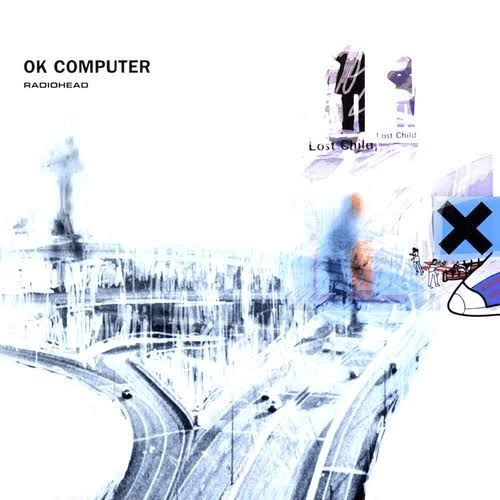




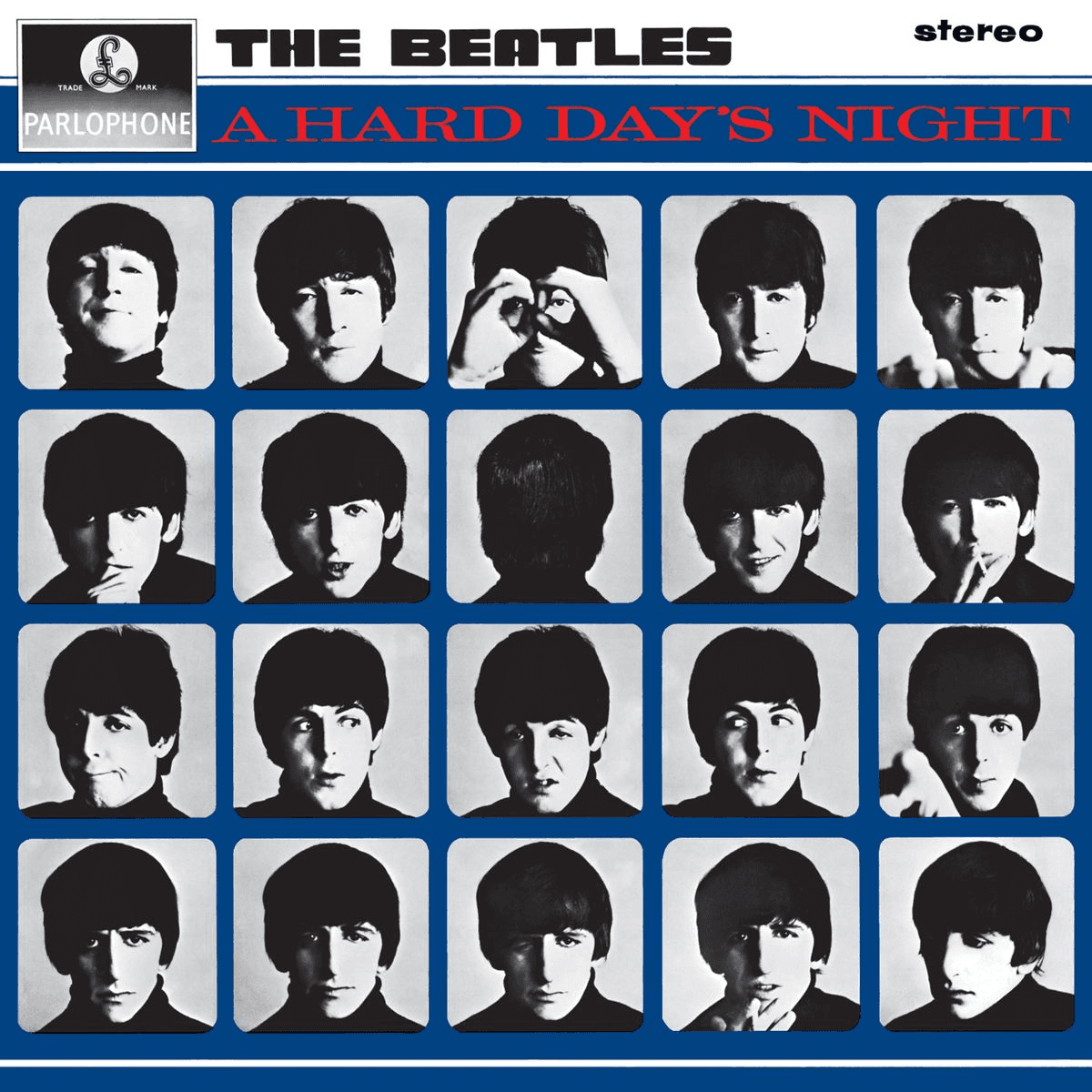




Lyrical ideas get scattered across voice memos, notes, texts, or disappear entirely.
Writer’s block amplifies this
When artists hit a wall, they turn to RhymeZone, Genius, or a producer.
Existing tools don’t help them break out of that block. They only provide more text to sift through.
A CRITICAL INSIGHT
Modern music is written in chunks, not full verses
Hip-hop artists use punching in, recording one bar at a time, layering ideas in small segments.
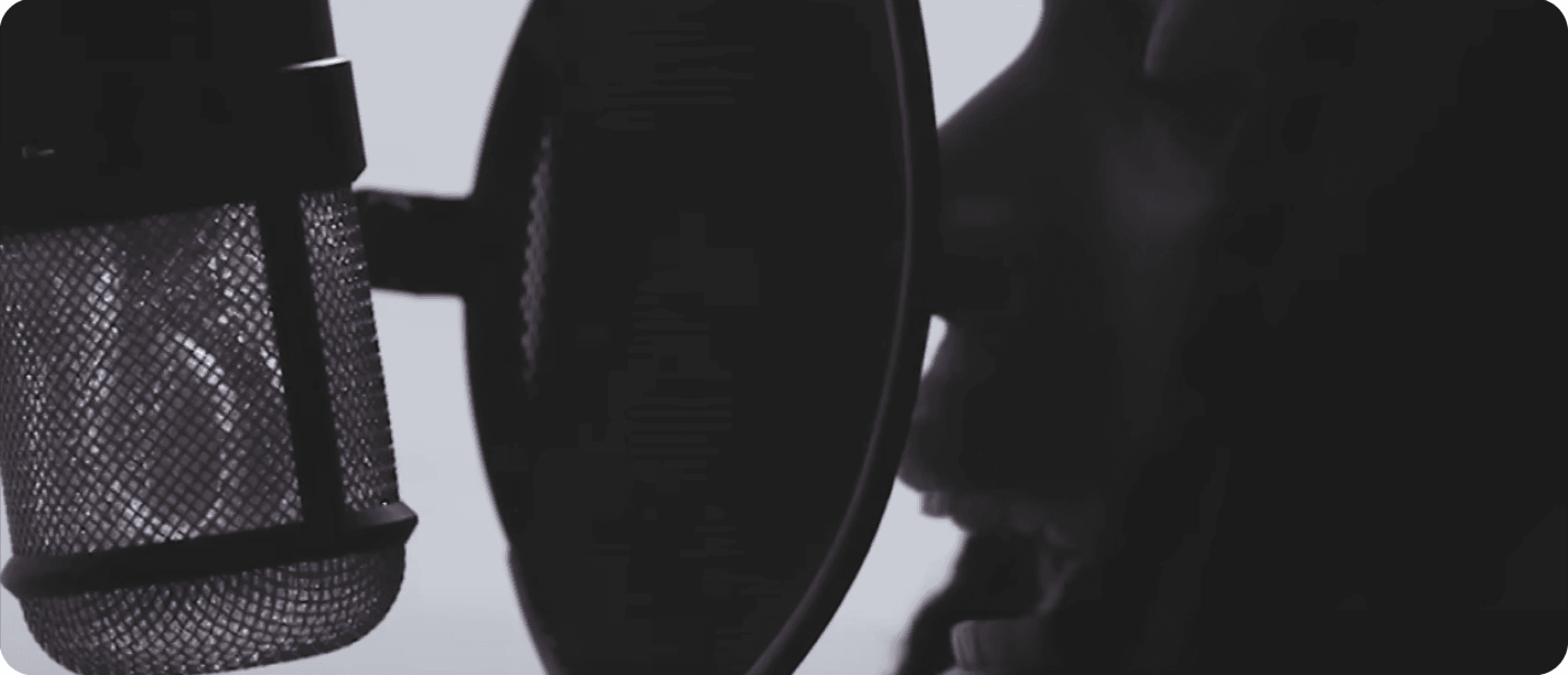
The process
Older workflows revolved around writing the perfect verse before recording.
Now, artists drop into a part in the track, record a bar, adjust, refine, and keep everything intact.
An audio engineer’s role
In fact, in a real recording studio, artists work with an audio engineer to manage and adjust their punch-ins
The artist might tell the audio engineer “keep that one,” “that’s bad,” or even “speed that part up”
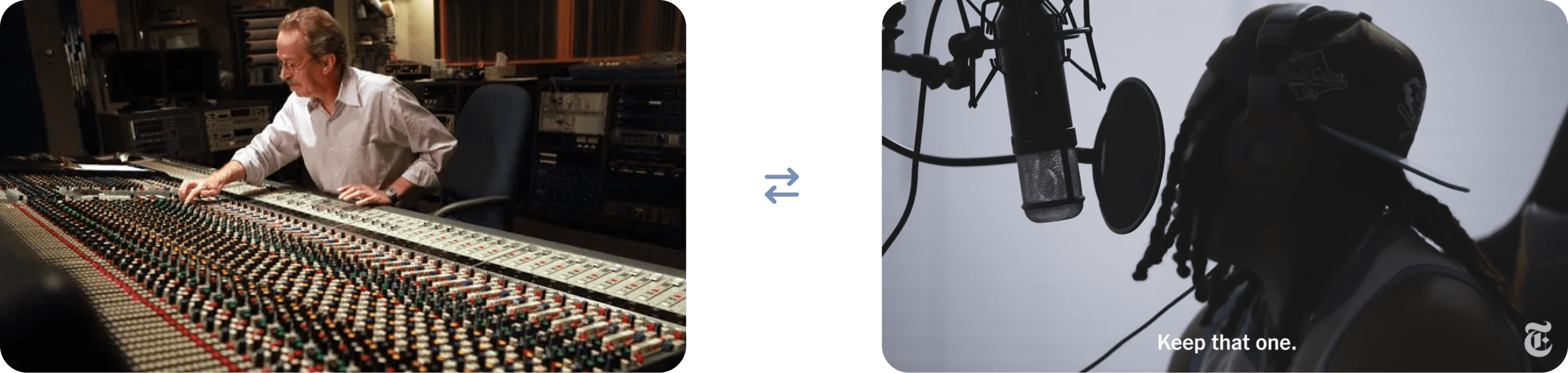
What if lyric writing worked the same way as “punching-in”?
DESIGN DECISIONS
Building tools that support the creative process
We're designing for creativity, giving artists momentum without taking the pen away.
Design for artists who want AI to nudge them forward, not take over.
Protect momentum
Anything that interrupts recording, decision-making, or flow should be optional and invisible until needed.
Create without committing
Make exploration low-risk. Ideas should be easy to try, discard, and revisit without forcing decisions.
Honor the artist’s voice
[Untitled] should amplify what the artist brings, not overwrite it. Our role isn’t to write for them.
SOLUTION
Enable musicians to write lyrics the way they record them in fragments
Instead of a standalone tool, we designed an experience inside [Untitled], a playground for music.
Creating a loop
Punching in + audio engineer
Lyric playground
Version history
MANAGING ALL PUNCH-INS
Artists shouldn’t have to listen to everything to know what matters
Contextualizing takes as they’re recorded
Punching-in is fast
Artists record many takes in a row to stay in momentum, without stopping to organize.
Without a management system, it would be tedious to listen through every recording to find the best one.
How do we keep the favoriting system simple?
Lightweight approaches
Autoplay to cycle through all the takes
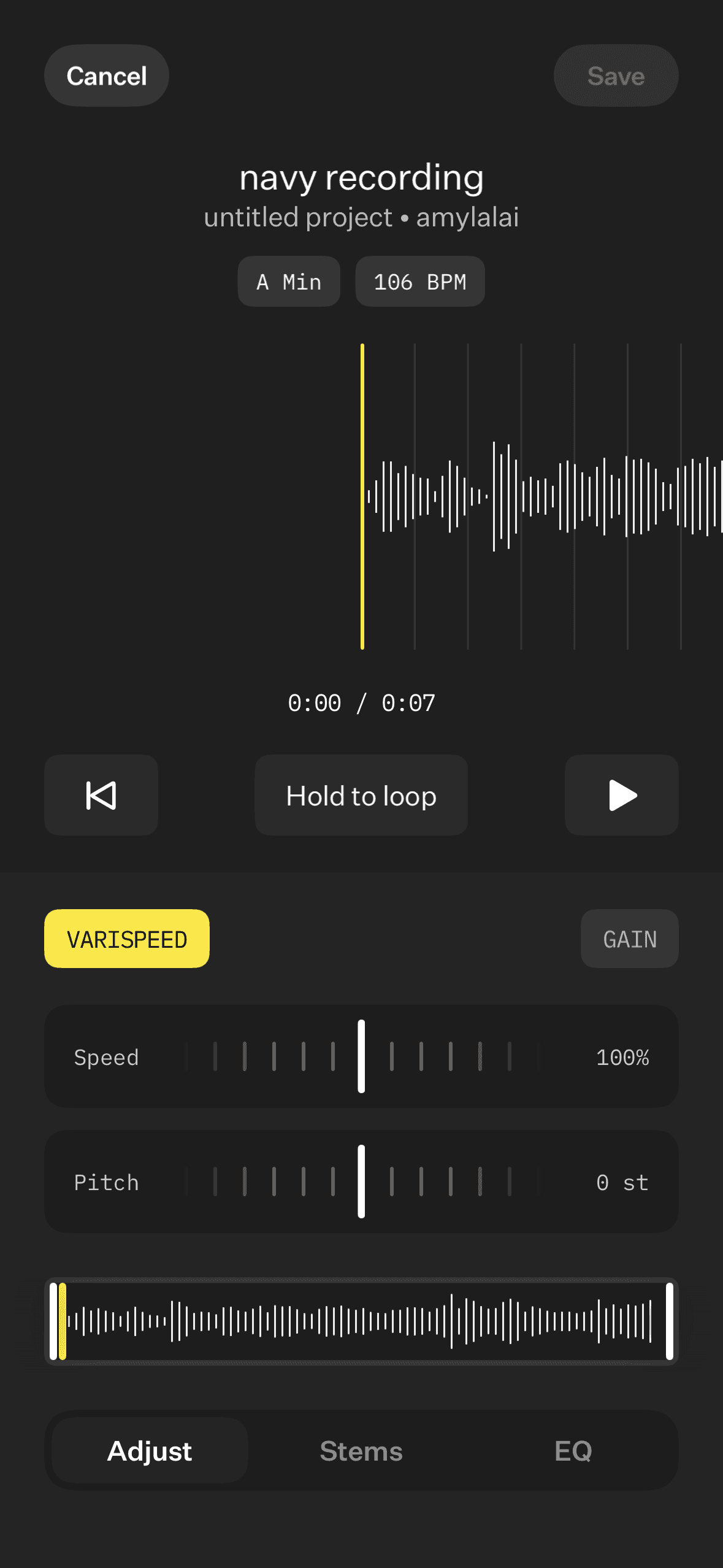
Hold to loop
Play
ice box recording
2:44 AM
1
0:06
matcha recording
3:57 AM
2
0:04
snow recording
6:01 AM
3
0:05
donut recording
9:46 PM
4
0:03
Recordings
Adjust
Stems
EQ
Record
Using AI, we could help find the best punch-ins
Hold to loop
Adjust
Stems
EQ
Record
Recordings
donut recording
9:46 PM
4
0:03
snow recording
6:01 AM
3
0:05
matcha recording
3:57 AM
2
0:04
Adjust
Stems
EQ
Record
TOP PICK
ice box recording
2:44 AM
1
0:06
AI audio engineer
Great, I’ll keep this one.
Hold to loop
Adjust
Stems
EQ
Record
Hold to loop
Adjust
Stems
EQ
Record
ice box recording
2:44 AM
1
0:06
matcha recording
3:57 AM
2
0:04
snow recording
6:01 AM
3
0:05
donut recording
9:46 PM
4
0:03
Saved Recordings
Adjust
Stems
EQ
Record
DESIGNING AI FOR ARTISTS
Supporting nuance in a punch-in workflow
Punching-in favors speed, but writing often requires stepping back. The lyric playground works alongside the system.
The lyric playground
Rather than writing lyrics for artists, the playground works with what they have already recorded.
Version history
These punch-ins are meant to be quick but they are not meant to disappear.
By keeping a history of versions, artists don’t have to rely on memory. They can refer back and keep tabs.
Version history approaches
A pop-up to the history
RHYME
ice box recording
2:44 AM
ice box recording
Playground
Explore various rhyme schematics
end
multi
internal
variance
You gon’ have to
push past, look fast, hook last
And I’ll come
down on it
pound sound
So mama you know I show lies, throw ties
Always want you to break fake, shake stakes
V1
Record
New Folder
New Project
Search
V1
V1.1
Keeping context visible [final solution]
RHYME
ice box recording
Draft
2 min ago
2
And I’ll come
down on it
pound sound
4
Always tell you I break fake
mistake
Remix
2
And I’ll come
down on it
pound sound
4
Always tell you I break fake
take hate
2 min ago
Revert
2
And I’ll come
down on it
say it loud
4
Always gotchu to break fake
say sum shade
2 min ago
Revert
2
And I’ll come
down on it
say it loud
4
Always gotchu to break fake
say sum shade
2 min ago
Revert
2:44 AM
ice box recording
Playground History
Explore various rhyme schematics
You gon’ have to
push past, look fast, hook last
And I’ll come
down on it
pound sound
So mama you know I show lies, throw ties
Always want you to break fake, shake stakes
RESULTS
We pitched to a room of leading industry designers
A few key takeaways
Crafting the narrative alongside the product clarified the decisions that aligns with our target users.
Tell the story as you design
AI should support, not overshadow
The moment AI crosses into “taking over,” artists lose trust. That line shaped our design decisions.
Building inside [Untitled] kept the experience familiar for artists.
Design for the ecosystem
Music is made in fragments. It’s made in fragments, so designing for that reality unlocked our solution.
Design for the process, not outcome
ADDITIONAL EXPLORATIONS
Plenty more lives in the design archive
Please reach out to see earlier explorations, alternate flows, or more!